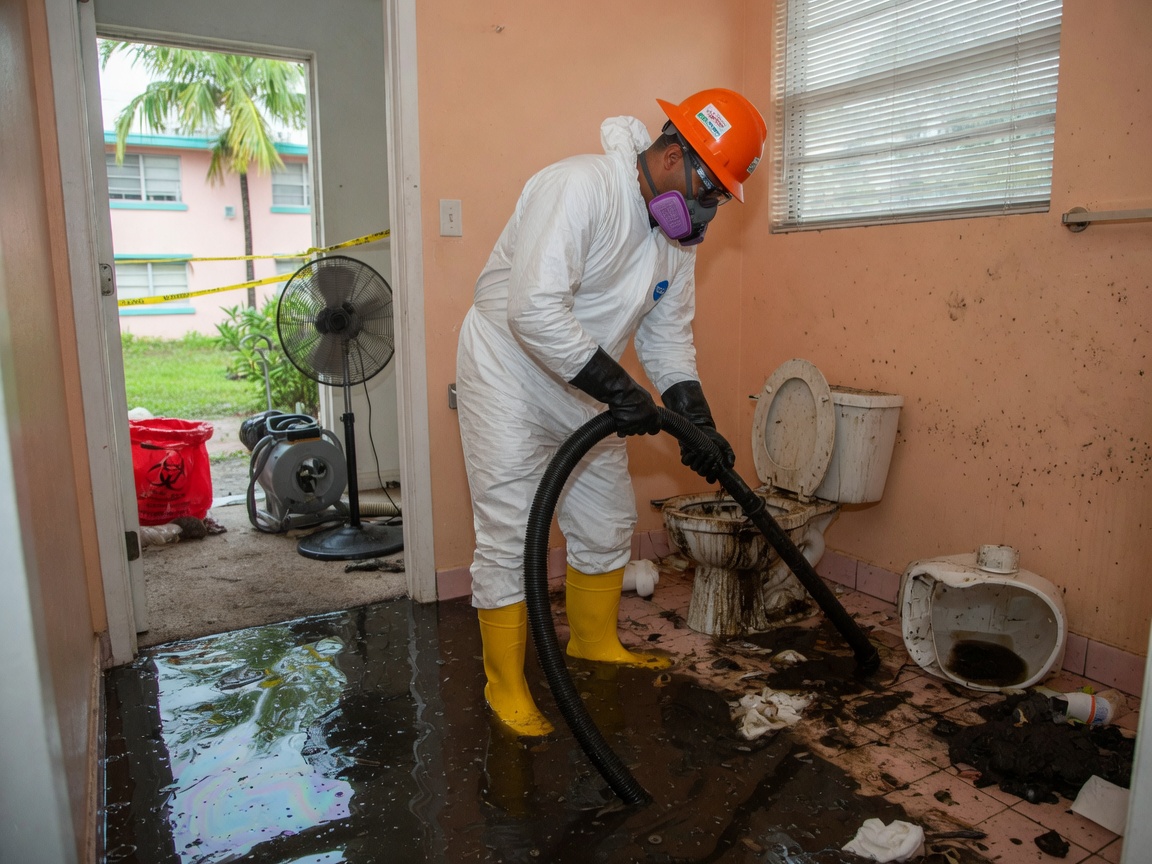
Miami's tropical monsoon climate brings intense summer downpours that overwhelm older sewer lines common in Little Havana and Overtown. Properties built before the 1970s often have clay or cast-iron pipes that crack or separate under the weight of sudden water surges from the Miami River basin. When sewage backs up through floor drains or toilets, the contamination spreads quickly through slab-on-grade homes typical in these areas, requiring immediate containment to prevent it from reaching drywall and subfloors.
In Brickell and Downtown Miami high-rises, backups frequently originate from shared building stacks during peak rainfall. The dense urban layout and limited yard space mean extraction equipment must often be staged in parking garages or sidewalks, adding time to every job. Technicians must also account for the high water table in Miami-Dade County, which keeps soil saturated and slows natural drainage after the event.
Coral Gables and Coconut Grove homes with older plumbing near the coast face added challenges from saltwater intrusion mixing with sewage. This combination accelerates corrosion on metal fixtures and requires specific neutralizers during cleaning. Crews routinely check for hidden pockets of contamination behind kitchen cabinets and in laundry rooms where pipes run under slabs.
Hialeah and Design District commercial properties see frequent backups from grease buildup combined with storm surges. These jobs demand larger extraction units and longer drying times because the thick masonry walls and concrete floors retain moisture longer than frame construction found farther inland.
Technician insight
In Miami the thing that catches most people out with Sewage Backup Cleanup is how quickly the high water table in Miami-Dade County keeps soil wet after a storm, so even after we pull the water the ground under the slab stays saturated and pushes moisture back up through cracks for days.
Little Havana Home After Evening Storm
Heavy rain caused a main line backup that sent sewage through the utility room floor drain into the kitchen of a 1960s concrete-block home. We found water had wicked three feet up the drywall behind the cabinets and into the subfloor. Extraction and targeted demolition removed the contaminated sections, followed by full disinfection and four days of drying before new flooring could be installed.
Sewage Backup Cleanup Services We Offer
✓Residential Floor Drain Extraction
Removes standing sewage from basements and utility rooms in single-family homes common in Little Havana and Overtown before it migrates into living spaces.
✓Commercial Stack Backup Sanitation
Cleans and disinfects shared sewer stacks in Brickell and Downtown Miami high-rises after heavy rain events overload building systems.
✓Toilet and Fixture Overflow Cleanup
Handles sudden overflows from toilets and sinks caused by clogged laterals during Miami's wet season in Coral Gables and Coconut Grove homes.
✓Slab Leak Sewage Removal
Extracts contaminated water that has pooled beneath concrete slabs in older Wynwood and Design District properties where pipe failures are frequent.
✓Grease Trap Backup Response
Clears and sanitizes commercial kitchens in Hialeah and Miami Beach after grease traps overflow during tropical storms.
Sewage Backup Cleanup Cost in Miami, FL
| Service | Typical Range | What Affects It |
|---|---|---|
| Initial Assessment And Extraction | $450–$950 | Varies by number of rooms and whether slab access is required |
| Full Sanitation And Disinfection | $600–$1,200 | Higher in commercial kitchens with grease involvement |
| Drying And Moisture Monitoring | $300–$700 | Depends on how long dehumidifiers must run in humid summer conditions |
| Slab Or Wall Cavity Remediation | $800–$2,000 | Required when sewage migrates under concrete in older homes |
Ranges are typical for Miami, FL and confirmed with an exact written quote before any work starts.
How it works
- 1
Site Assessment
Technicians inspect all affected rooms, trace the source of the backup, and identify hidden moisture in walls and under slabs using moisture meters.
- 2
Containment And Extraction
Negative air machines and barriers isolate the area while truck-mounted pumps remove standing sewage and contaminated water from floors and drains.
- 3
Cleaning And Disinfection
EPA-registered antimicrobials treat all surfaces, with extra attention to porous materials and joints where sewage can linger in Miami's humid air.
- 4
Drying And Monitoring
Industrial air movers and dehumidifiers run until moisture readings return to normal, with daily checks to prevent mold growth in the tropical climate.
Pricing
Upfront quotes based on square footage affected, depth of contamination, and whether hidden slab moisture is present.