2026-10-09 · Javier Morales
What Miami Homeowners Should Know About King Tide Water Intrusion
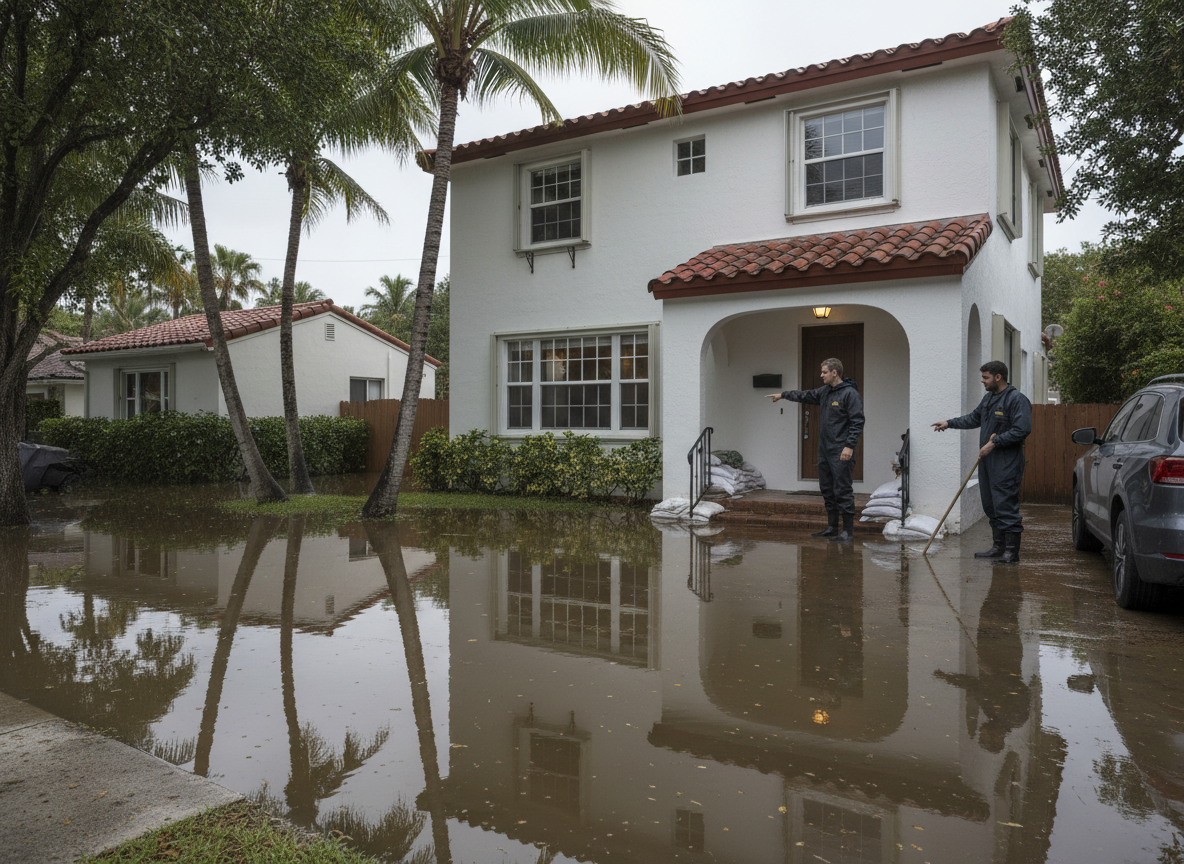
King tide water intrusion in Miami-Dade County typically begins when tides exceed 3 feet above mean sea level, pushing saltwater into streets and yards in Brickell, Coconut Grove and parts of Downtown Miami. This occurs most often from September through November during the wet season, when hot temperatures and heavy afternoon storms combine with lunar cycles to raise water levels 1 to 2 feet above normal high tide. Homes built before 1980 on slab foundations absorb moisture through stucco and porous limestone, leading to hidden damage that requires prompt emergency water extraction to prevent mold growth within 48 hours.
Why King Tides Hit Miami Neighborhoods Harder
Miami's flat terrain and limestone bedrock allow saltwater to travel inland through the ground rather than staying in streets. In Brickell and the Design District, high-rises sit on reclaimed land where fill material settles unevenly, creating low spots that hold water for days after a king tide recedes. Coconut Grove and Little Havana properties often have older plumbing and grading that directs runoff toward foundations instead of storm drains. These conditions differ from higher ground in Coral Gables or Hialeah, where intrusion stays limited to yards unless heavy rain coincides with the tide. The tropical monsoon climate adds daily downpours that keep soil saturated, so even moderate king tides can force water under door thresholds and into crawl spaces common in Wynwood and Overtown homes.
Common Entry Points in Miami Housing Stock
Pre-1970 concrete block homes in Little Havana and Overtown frequently show intrusion at the base of exterior walls where the slab meets soil. Sliding glass doors in Coconut Grove townhomes allow water to seep under tracks when tides reach the patio level. In Brickell condos, garage ramps and utility rooms sit below street grade, so water enters through expansion joints and electrical conduits. Homeowners should check for white salt residue on baseboards, musty odors near HVAC returns, and soft spots in hardwood floors within 24 hours of a high tide event. These signs appear faster here than in inland cities because Miami's humidity keeps materials damp longer after the water drains away.
Steps to Limit Damage After a King Tide
Document water depth with photos before it recedes, then remove standing water from yards using pumps rated for saltwater to avoid corrosion. Move furniture and rugs away from exterior walls in affected rooms. Run dehumidifiers set to 50 percent or lower in any space that received moisture. Contact professionals for emergency water extraction when water reaches interior flooring or when salt crystals appear on drywall. Follow up with water damage restoration to extract moisture from wall cavities common in Miami's masonry construction. Review the related guide on How to Handle Standing Water After Miami's Wet Season Flooding for pump placement tips specific to local storm drain layouts.
When to Call for Structural Drying Help
If moisture readings stay above 15 percent in drywall or wood framing 72 hours after the tide drops, hidden damage will likely spread. Miami Rapid Water Extraction operates Mon–Fri 8am–6pm and Sat 9am–2pm to respond to these calls across Miami-Dade County. Technicians use moisture meters calibrated for saltwater to map affected zones in Brickell and Coral Gables properties before setting up drying equipment. Early intervention stops salt from corroding rebar and electrical boxes, which happens faster in the county's humid environment than in drier climates. Homeowners who wait until visible mold appears often face larger repairs in older neighborhoods where plaster and lath construction traps moisture behind finishes.