2026-10-09 · Javier Morales
Steps to Take When Discovering Hidden Water Damage in South Florida Walls
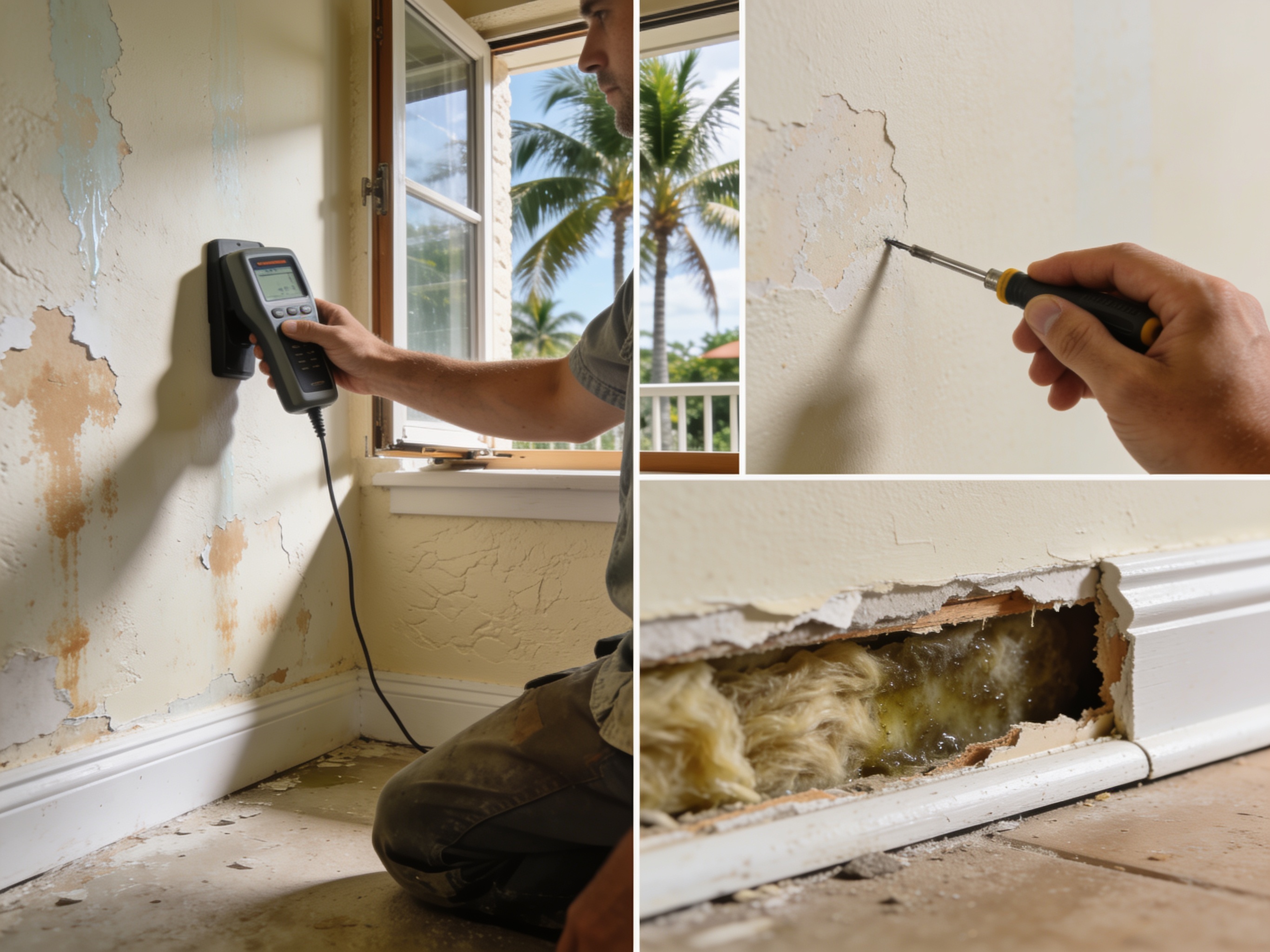
When hidden water damage appears in South Florida walls, begin by locating the leak source, isolating the affected area, and arranging emergency water extraction within 24 hours to curb mold growth driven by Miami-Dade County's tropical monsoon climate.
Identifying Hidden Damage Signs
In neighborhoods such as Little Havana and Overtown, many homes built before 1970 feature plaster or lath walls that trap moisture behind layers. Look for buckling baseboards, musty odors near electrical outlets, or soft spots along seams after heavy summer rains. These clues differ from newer Brickell condos where drywall fails faster due to high humidity. Check areas near windows or plumbing risers common in Coconut Grove bungalows. Early detection prevents structural rot that spreads through the porous limestone soil typical across Miami-Dade County.
Containing the Leak and Protecting the Space
Shut off water at the main valve first, then move furniture and belongings away from the wall. Use plastic sheeting to block airflow between rooms, which helps limit humidity migration during the wet season. In Wynwood lofts with open floor plans, temporary barriers become essential because moisture travels quickly through exposed ductwork. Avoid running HVAC systems until extraction starts, as they can spread spores. Document the damage with dated photos for insurance purposes before any cleanup begins.
Professional Extraction and Initial Drying
Contact a team offering emergency water extraction to remove standing water from wall cavities using moisture meters and negative air machines. In Coral Gables homes with thick stucco exteriors, technicians often need to create small access points to reach trapped water without full demolition. Follow up with water damage restoration that includes dehumidification set to 40-50 percent relative humidity, matching South Florida's typical conditions. This approach reduces secondary damage compared with DIY fans that cannot handle the volume of moisture in older masonry walls.
Monitoring and Mold Prevention Steps
After extraction, schedule daily moisture readings for at least five days because residual humidity in Miami-Dade County can re-wet materials quickly. Place data loggers inside wall cavities to track temperature and moisture levels. If readings stay above 16 percent, additional drying or material removal may be required. Review What Miami Homeowners Should Know About King Tide Water Intrusion for seasonal patterns that affect ground-level walls in areas like Downtown Miami. Consistent monitoring stops mold colonies from forming within the 48-72 hour window common in hot wet summers.
Long-Term Repairs and Local Considerations
Once walls test dry, replace insulation and drywall sections with moisture-resistant materials suited to the region's conditions. In Design District buildings, owners often choose cement board in bathrooms to resist future intrusion from roof leaks or pipe failures. Schedule follow-up inspections every six months, especially before the wet season peaks. For properties in Hialeah or Miami Beach with slab-on-grade construction, verify that vapor barriers remain intact beneath flooring. These targeted repairs address the specific challenges of older housing stock and frequent rainfall that define water damage work across Miami-Dade County.