2026-10-09 · Javier Morales
How to Handle Standing Water After Miami's Wet Season Flooding
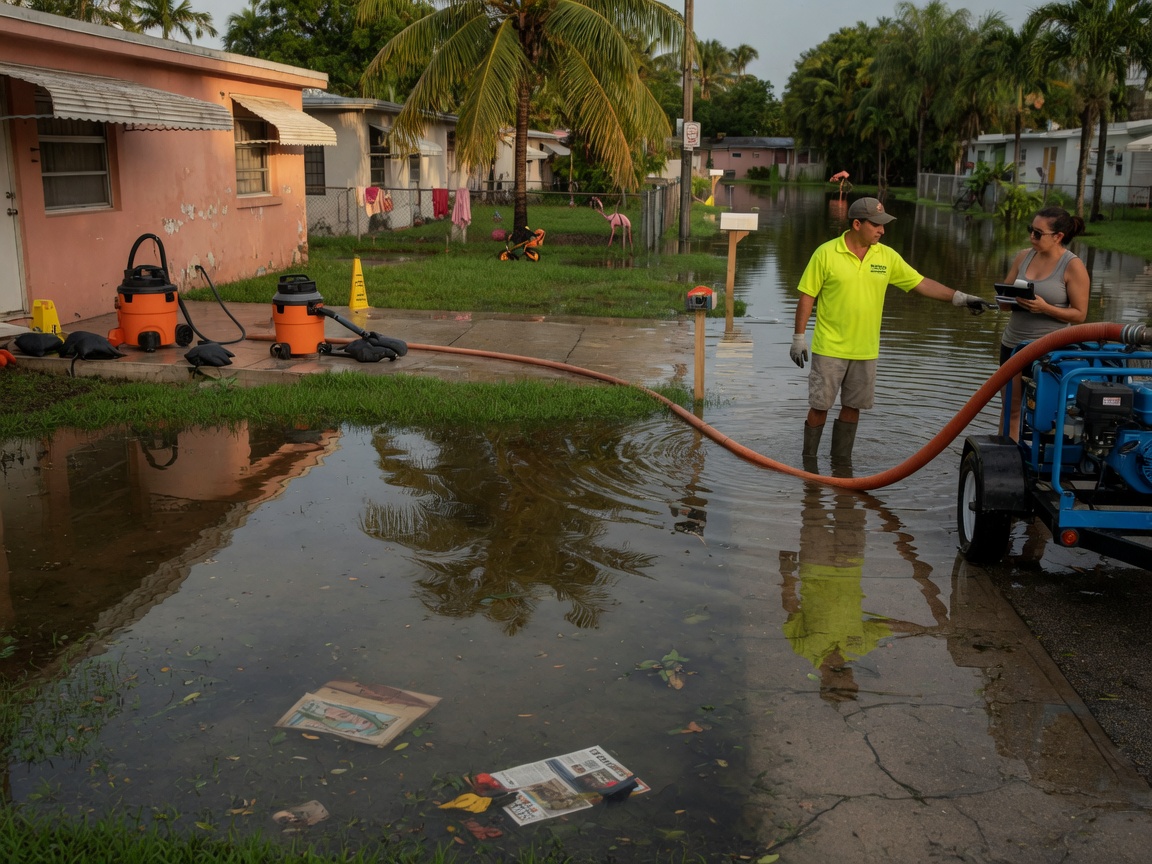
After Miami's wet season flooding, begin by turning off power to affected areas and wearing protective gear while avoiding direct contact with the water, then use pumps or wet vacuums to remove standing water within the first 24 to 48 hours to limit damage in Miami-Dade County homes.
Prioritize Safety Before Any Extraction
Miami's hot wet summers often leave several inches of standing water in yards and crawl spaces of older single-family homes in Little Havana and Overtown, where slab foundations sit close to the water table. Check for electrical hazards first by locating the main panel and shutting off breakers to any flooded zones, then ventilate the space without using fans that could spread contaminants. In Brickell high-rises, water can pool on lower-level parking garages, so test depth with a stick before stepping in and watch for debris from nearby construction sites. Homeowners in Coconut Grove should also scan for wildlife like snakes displaced by the rains. These precautions prevent shocks and slips that commonly occur when residents rush cleanup after afternoon thunderstorms.
Remove Standing Water with Proper Equipment
Once safe, extract the bulk of the water using submersible pumps rated for at least 1,500 gallons per hour, focusing on low spots common in Wynwood warehouses converted to lofts and older Coral Gables bungalows. Work from the highest point toward drains to avoid pushing water into walls, and empty collection tanks frequently during Miami's humid conditions that slow evaporation. In Hialeah and Miami Beach border zones, where king tides compound wet-season runoff, combine pumping with squeegees on concrete surfaces to push remaining moisture toward exits. This approach typically clears visible standing water in 4 to 8 hours for a standard 1,200-square-foot home, though hidden pockets in HVAC ducts require professional inspection afterward. Link to related guidance on king tide effects for properties near the bay.
Dry the Structure and Monitor for Hidden Issues
After extraction, deploy industrial dehumidifiers set to 50 percent relative humidity and air movers positioned 12 to 18 inches from walls to dry porous materials like drywall and carpet padding within 48 to 72 hours before mold colonies form in Miami's 80-plus degree temperatures. Check under cabinets and behind baseboards in Design District buildings where moisture wicks upward from flooded streets. Track progress with a moisture meter reading below 15 percent on wood framing to confirm the job is complete. Properties in Downtown Miami often need extra attention to elevator shafts and utility rooms that trap water. For deeper wall penetration, review steps outlined in our guide on discovering hidden water damage in South Florida walls.
Know When Professional Help Speeds Recovery
If water depth exceeds 6 inches or sewage mixes in from overwhelmed Miami-Dade County storm drains, contact a team for emergency water extraction rather than attempting DIY removal that risks incomplete drying. Technicians familiar with local conditions use moisture mapping tools to locate saturation in concrete slabs common throughout the county. Schedule service during business hours of Monday through Friday 8am to 6pm or Saturday 9am to 2pm to align with peak response times after major storms. This prevents secondary issues like warped flooring in Little Havana rentals or electrical shorts in Brickell condos. Follow up with flood damage cleanup services to handle any remaining contaminants from street runoff.
Prevent Future Standing Water Problems
Install French drains or regrade yards in Coral Gables homes where clay soils hold water against foundations during prolonged summer rains. Clear gutters before wet season starts and consider backflow valves in Overtown properties near older sewer lines. These measures reduce recurrence in neighborhoods prone to pooling after 3-inch hourly downpours. Regular checks around Vizcaya Museum area homes show how elevation changes affect drainage patterns unique to Miami-Dade County.